Best Solar Panel Angle by Latitude: A Complete Guide for Maximum Energy Production
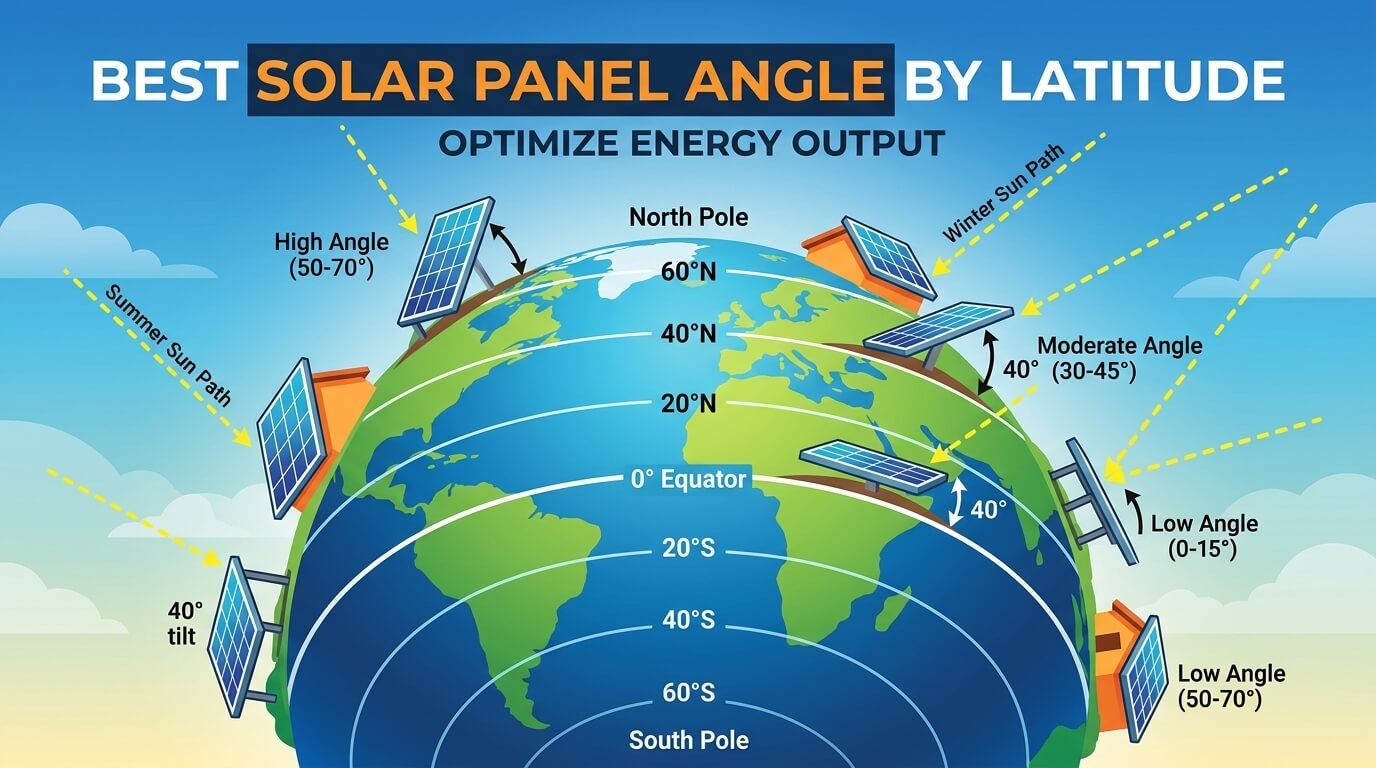
Installing solar panels is a long-term investment, and getting the positioning right can make a noticeable difference in energy production. One of the most important factors is the angle at which your solar panels are installed.
The correct solar panel angle helps your system capture more sunlight throughout the year, improving efficiency and increasing electricity generation. In this guide, you’ll learn how latitude affects solar panel positioning and how to find the best angle for your location.
Why Solar Panel Angle Matters
Solar panels generate electricity by converting sunlight into usable energy. The more direct sunlight reaches the surface of a panel, the more electricity it can produce.
When panels are installed at the wrong angle, they may receive less sunlight during key hours of the day. This can reduce overall energy production and lower the return on your solar investment.
Proper positioning helps:
- Increase solar energy output
- Improve system efficiency
- Reduce electricity costs
- Maximize long-term savings
- Improve year-round performance
What Is Latitude?
Latitude is the distance between your location and the equator, measured in degrees.
Locations near the equator receive sunlight more directly throughout the year, while locations farther away experience greater seasonal changes in sun position.
Because of this, latitude is one of the most important factors used when determining the ideal solar panel angle.
Best Solar Panel Angle by Latitude
A common rule is to set the tilt angle close to your latitude for a fixed solar installation.
Here are general recommendations:
| Latitude | Recommended Tilt Angle |
| 0°–15° | 10°–15° |
| 15°–25° | 15°–25° |
| 25°–35° | 25°–35° |
| 35°–45° | 35°–45° |
| 45°+ | 45°–60° |
These guidelines provide balanced performance throughout the year for fixed solar systems.
Seasonal Solar Panel Adjustments
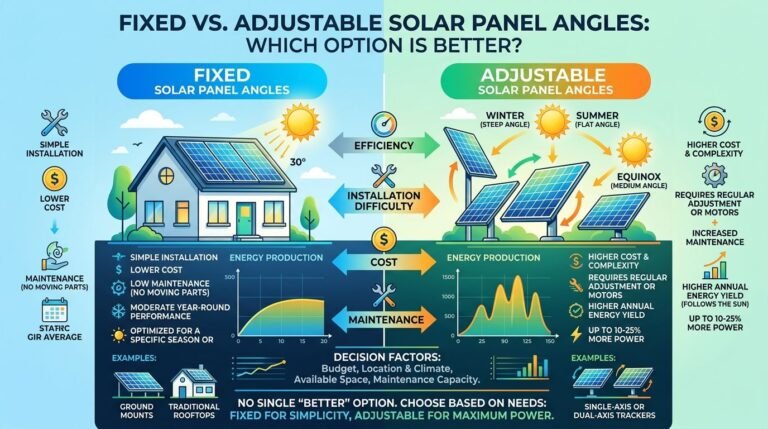
If your mounting system allows adjustments, changing the panel angle during different seasons can increase energy production.
Summer Angle
During summer, the sun sits higher in the sky. A lower panel angle often performs best.
Winter Angle
In winter, the sun is lower on the horizon. Increasing the tilt angle helps panels receive more direct sunlight.
Spring and Fall
Moderate tilt angles typically provide good performance during transitional seasons.
Many homeowners choose a fixed angle because it requires less maintenance, while others prefer adjustable systems for maximum efficiency.
Best Direction for Solar Panels
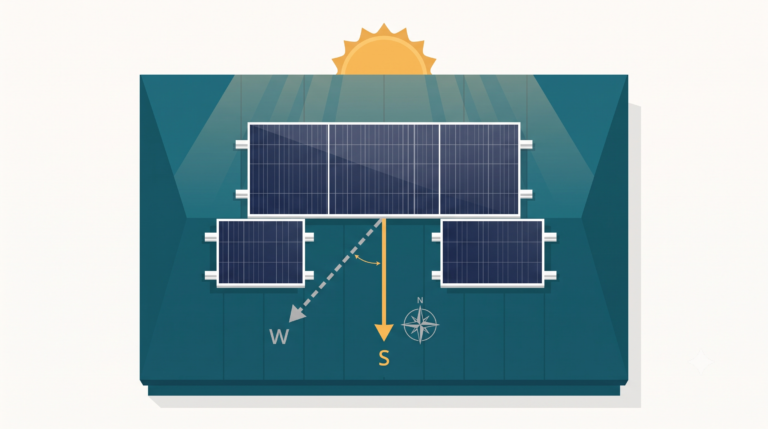
Direction is just as important as angle.
Northern Hemisphere
For locations in the Northern Hemisphere, solar panels generally perform best when facing true south.
Southern Hemisphere
For locations in the Southern Hemisphere, solar panels should usually face true north.
This orientation allows panels to receive the highest amount of sunlight throughout the day.
Roof Pitch vs Solar Panel Angle
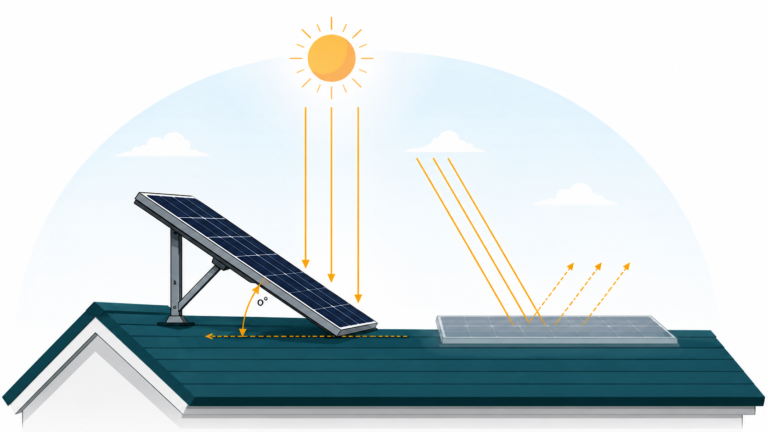
Many people assume that roof pitch automatically provides the best angle for solar panels. While this is sometimes true, it isn’t always the most efficient option.
Roof pitch may differ from the recommended solar angle for your latitude.
Professional installers often use mounting brackets to optimize panel positioning when roof angles are not ideal.
Common Mistakes to Avoid
Ignoring Local Conditions
Trees, buildings, and nearby structures can create shading that affects solar performance.
Using a Generic Angle
Every location receives sunlight differently. A one-size-fits-all approach rarely provides optimal results.
Forgetting Seasonal Changes
In regions with significant seasonal variation, adjusting panel angles can improve annual production.
Incorrect Direction
Even a perfect angle may underperform if panels face the wrong direction.
How a Solar Panel Angle Calculator Helps
A solar panel angle calculator simplifies the process of finding the best setup for your location.
Instead of manually calculating latitude, solar position, and seasonal adjustments, a calculator can instantly provide recommendations based on your coordinates or city.
Many tools also offer:
- Seasonal angle suggestions
- Direction recommendations
- Roof pitch comparisons
- Location-based optimization
This makes planning a solar installation much easier for homeowners and businesses.
Frequently Asked Questions
What is the best angle for solar panels?
For fixed systems, the best angle is usually close to your latitude.
Does changing the angle improve solar output?
Yes. Seasonal adjustments can increase solar energy production, especially in regions with large changes in sun position.
Should solar panels always face south?
In the Northern Hemisphere, south-facing panels generally produce the most energy. In the Southern Hemisphere, north-facing panels are usually best.
Can roof pitch affect solar efficiency?
Yes. Roof pitch influences how much sunlight reaches your panels and may impact annual energy production.
Final Thoughts
Choosing the right solar panel angle is one of the easiest ways to improve solar system performance. While factors such as shading, weather, and equipment quality also matter, proper panel positioning remains a key part of maximizing energy generation.
Using a solar panel angle calculator can help you quickly determine the ideal setup for your location and ensure your solar investment performs efficiently for years to come.