Fixed vs Adjustable Solar Panel Angles: Which Option Is Better?
One of the most common questions among homeowners and solar enthusiasts is whether solar panels should remain in a fixed position or be adjusted throughout the year.
The answer depends on your location, budget, energy goals, and how much maintenance you’re willing to perform. Both fixed and adjustable solar panel systems have advantages and disadvantages, and understanding these differences can help you make a smarter decision.
In this guide, we’ll compare fixed and adjustable solar panel angles, explain how each system works, and help you determine which option is best for your needs.
What Is a Fixed Solar Panel Angle?
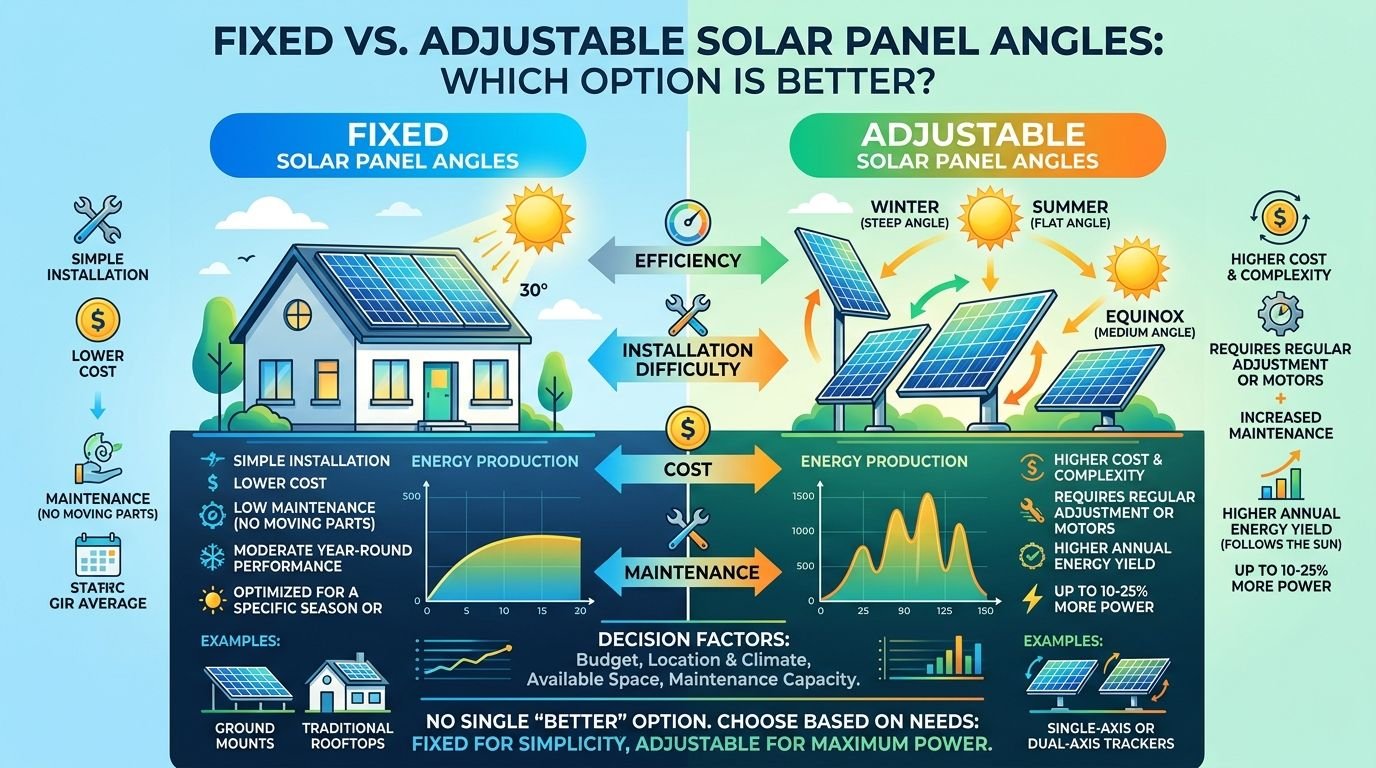
A fixed solar panel system is installed at a single angle that remains unchanged throughout the year.
Most residential rooftop systems use a fixed angle because they are simple, affordable, and require very little maintenance after installation.
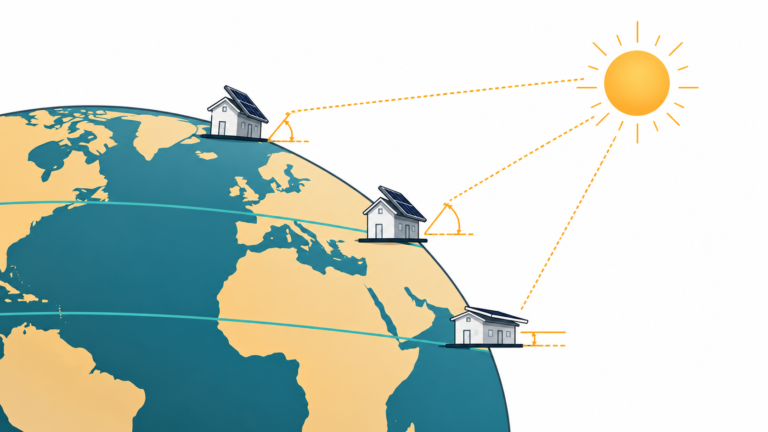
The angle is usually selected based on the property’s latitude to provide balanced energy production throughout all seasons.
Advantages of Fixed Solar Panels
Lower Installation Costs
Fixed mounting systems are generally less expensive than adjustable systems because they require fewer components and less labor.
Minimal Maintenance
Since there are no moving parts, fixed systems require very little upkeep.
Long-Term Reliability
Fixed mounts are durable and can perform reliably for many years with minimal attention.
Ideal for Rooftops
Most residential roofs naturally support fixed solar installations.
Disadvantages of Fixed Solar Panels
Reduced Seasonal Optimization
Because the angle remains the same all year, fixed systems cannot fully adapt to seasonal changes in the sun’s position.
Slightly Lower Annual Production
Compared to adjustable systems, fixed panels may produce less electricity in certain seasons.
What Is an Adjustable Solar Panel Angle?
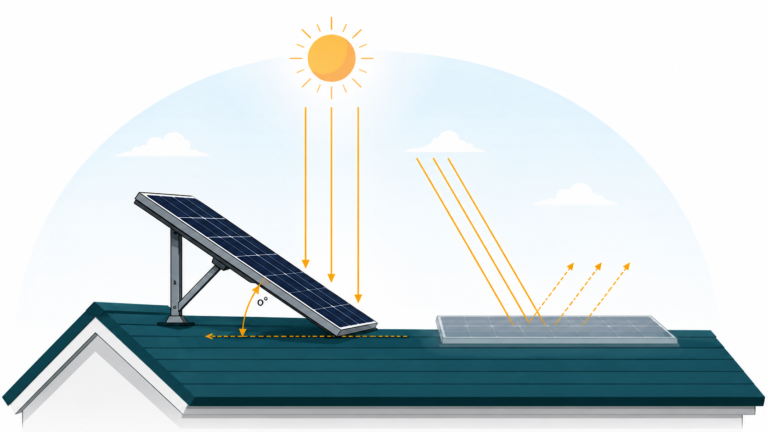
An adjustable solar panel system allows the angle of the panels to be changed periodically.
Some systems are adjusted manually a few times each year, while others use automated solar tracking technology.
The goal is to maintain an angle that captures the maximum amount of sunlight during each season.
Advantages of Adjustable Solar Panels
Higher Energy Production
Adjustable systems can increase annual solar output by maintaining optimal positioning throughout the year.
Better Winter Performance
Steeper winter angles help capture more sunlight when the sun sits lower in the sky.
Improved Summer Efficiency
Lower summer angles allow panels to receive stronger sunlight during peak months.
Greater Flexibility
Owners can fine-tune panel positioning based on local conditions and seasonal requirements.
Disadvantages of Adjustable Solar Panels
Higher Initial Cost
Adjustable mounts cost more than standard fixed systems.
Increased Maintenance
Moving parts require occasional inspection and maintenance.
More Complex Installation
Installation may take longer and require specialized mounting hardware.
How Much More Energy Can Adjustable Panels Produce?
The exact increase varies by location, climate, and installation quality.
In many cases, manually adjusting solar panel angles several times per year can increase annual energy production by approximately 5% to 15%.
Automated solar tracking systems may generate even greater improvements, especially in locations with high solar exposure.
The farther your location is from the equator, the more noticeable seasonal angle adjustments tend to become.
When Fixed Solar Panels Make Sense
Fixed solar systems are often the best choice for:
- Residential rooftop installations
- Homeowners seeking low maintenance
- Smaller solar projects
- Budget-conscious buyers
- Areas with consistent year-round sunlight
Most homeowners find that the simplicity and reliability of a fixed system outweigh the potential gains from seasonal adjustments.
When Adjustable Solar Panels Make Sense
Adjustable systems may be a better option for:
- Ground-mounted solar arrays
- Off-grid installations
- Remote cabins
- RV solar setups
- Agricultural solar projects
- Users focused on maximizing output
If maximizing every possible watt of solar production is important, adjustable systems may be worth considering.
Fixed Angle Recommendations by Latitude
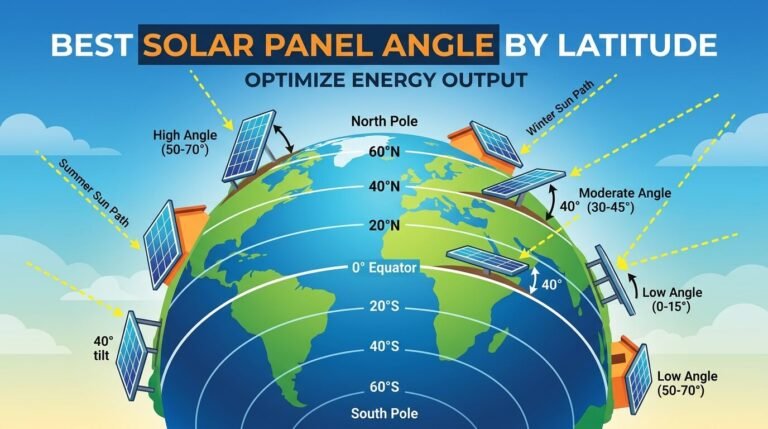
For fixed solar installations, a common recommendation is to set the panel angle close to the property’s latitude.
General Guidelines
| Latitude | Recommended Fixed Angle |
| 0°–15° | 10°–15° |
| 15°–25° | 15°–25° |
| 25°–35° | 25°–35° |
| 35°–45° | 35°–45° |
| 45°+ | 45°–60° |
These recommendations provide balanced year-round performance for most installations.
Seasonal Adjustment Guidelines
If you have an adjustable system, seasonal modifications can improve energy production.
Spring and Fall
Use an angle close to your latitude.
Summer
Reduce the panel angle by approximately 10–15 degrees from your latitude.
Winter
Increase the panel angle by approximately 10–15 degrees above your latitude.
These adjustments help panels maintain better exposure to the changing position of the sun.
Does Solar Panel Direction Matter?
Absolutely.
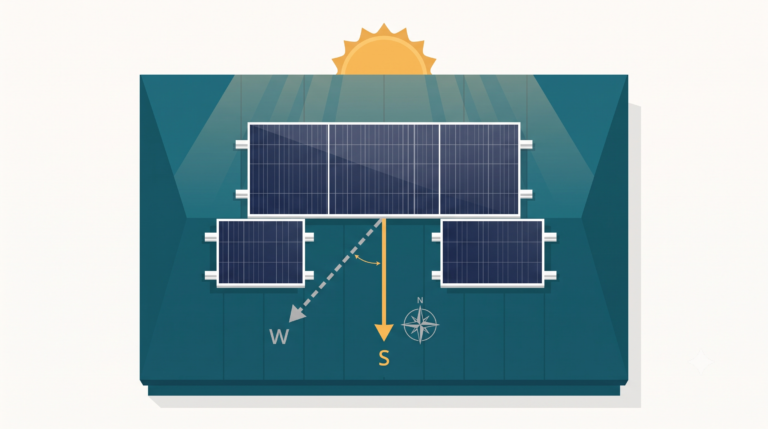
The best angle in the world cannot fully compensate for poor panel direction.
Northern Hemisphere
Solar panels generally perform best when facing true south.
Southern Hemisphere
Solar panels generally perform best when facing true north.
Combining the correct direction with the correct angle helps maximize solar energy production.
Cost Comparison
While costs vary by region and installation type, fixed systems are almost always less expensive.
Fixed Systems
- Lower equipment costs
- Simpler installation
- Minimal maintenance
Adjustable Systems
- Higher hardware costs
- Additional installation requirements
- Ongoing adjustments or maintenance
Homeowners should weigh potential energy gains against additional costs before selecting a system.
Frequently Asked Questions
Are adjustable solar panels worth it?
For many residential installations, fixed systems provide excellent value. Adjustable systems become more attractive when maximum energy production is the primary goal.
How often should solar panel angles be adjusted?
Most manually adjustable systems are changed two to four times per year.
Do solar trackers work better than adjustable mounts?
Solar trackers often provide greater energy gains but come with significantly higher costs and maintenance requirements.
Which system lasts longer?
Fixed systems typically last longer because they have fewer moving parts.
Final Thoughts
Both fixed and adjustable solar panel systems can provide excellent results when properly installed.
For most homeowners, fixed solar panels offer the best combination of affordability, reliability, and simplicity. For users seeking the highest possible energy production, adjustable systems may deliver additional benefits through seasonal optimization.
Before making a decision, consider your budget, maintenance preferences, installation type, and long-term energy goals. Selecting the right system can help maximize solar performance and improve the return on your renewable energy investment.